
Window & door systems
Fiberglass windows and doors with hybrid vacuum glass, plus hurricane-rated aluminum for the coast.
Engineered to order for multifamily, commercial, modular and Passive House projects.
Request a quote

Built for commercial, modular and Passive House & PHIUS projects.
GlasFëns Window Systems USA is a supplier of high-performance windows, doors and façade systems for buildings across North America. Our focus is fiberglass, with aluminum for hurricane and high-wind applications, all based on proven European systems and fitted with German hardware. We exist to do one thing exceptionally well: deliver energy-efficient fenestration that performs at the highest level, approaching zero.
Our components come from manufacturers who have been producing window and door systems for generations, recognized leaders across Europe, with hardware from Roto, Siegenia and G-U, all engineered and made in Germany. Our fiberglass is bound with polyurethane resin from Huntsman, an American company based in Texas. That precision and attention to detail is what makes a GlasFëns system perform quietly and reliably for decades.
For energy modelers
Most window websites are written to sell. Ours is written for the people who have to put a window into an energy model and defend the number: Passive House designers and consultants, PHIUS CPHCs, verifiers and raters, HERS raters, energy modelers and building-envelope consultants. If you are entering windows into PHPP, WUFI Passive, EnergyPlus or a code-compliance model, the inputs are here, sourced and labeled, not buried in a brochure.
PHI-certified frame U-value (W/m²K), glass-edge Ψ (W/m·K) and 112 mm frame face width, ready for PHPP and WUFI Passive.
Certified installation thermal bridges at sill, head and jambs for EIFS, light wood-frame and ICF walls.
Whole-window U for every F-Series system at NFRC standard sizes, from LBNL THERM 8.1 and WINDOW 8.1, in Btu/h·ft²·°F and W/m²K.
Isotherm maps of every modeled frame section. THERM files are available to energy consultants on request.
Temperature factor for comfort and condensation risk, with the coldest interior surface temperature at design conditions.
Measured conductivity of our pultruded polyurethane fiberglass (Intertek), less than half the 0.27 the PHI certificate conservatively assumes.
Every value on the site is labeled Tested, Certified or Calculated, and shown in both Btu/h·ft²·°F and W/m²K. Center-of-glass U and SHGC for all six ZERO glass packages, air leakage and structural test results, and the PHI certificate values are all on the site.

Glass walls
R‑23 at the center of the glass puts a window wall in the same range as an insulated stud wall, so floor-to-ceiling glass no longer has to be the weak spot in the envelope.
See the glass ›Products
Fiberglass windows and doors from the GR60 to the GR145, plus hurricane-rated aluminum.
F-Series
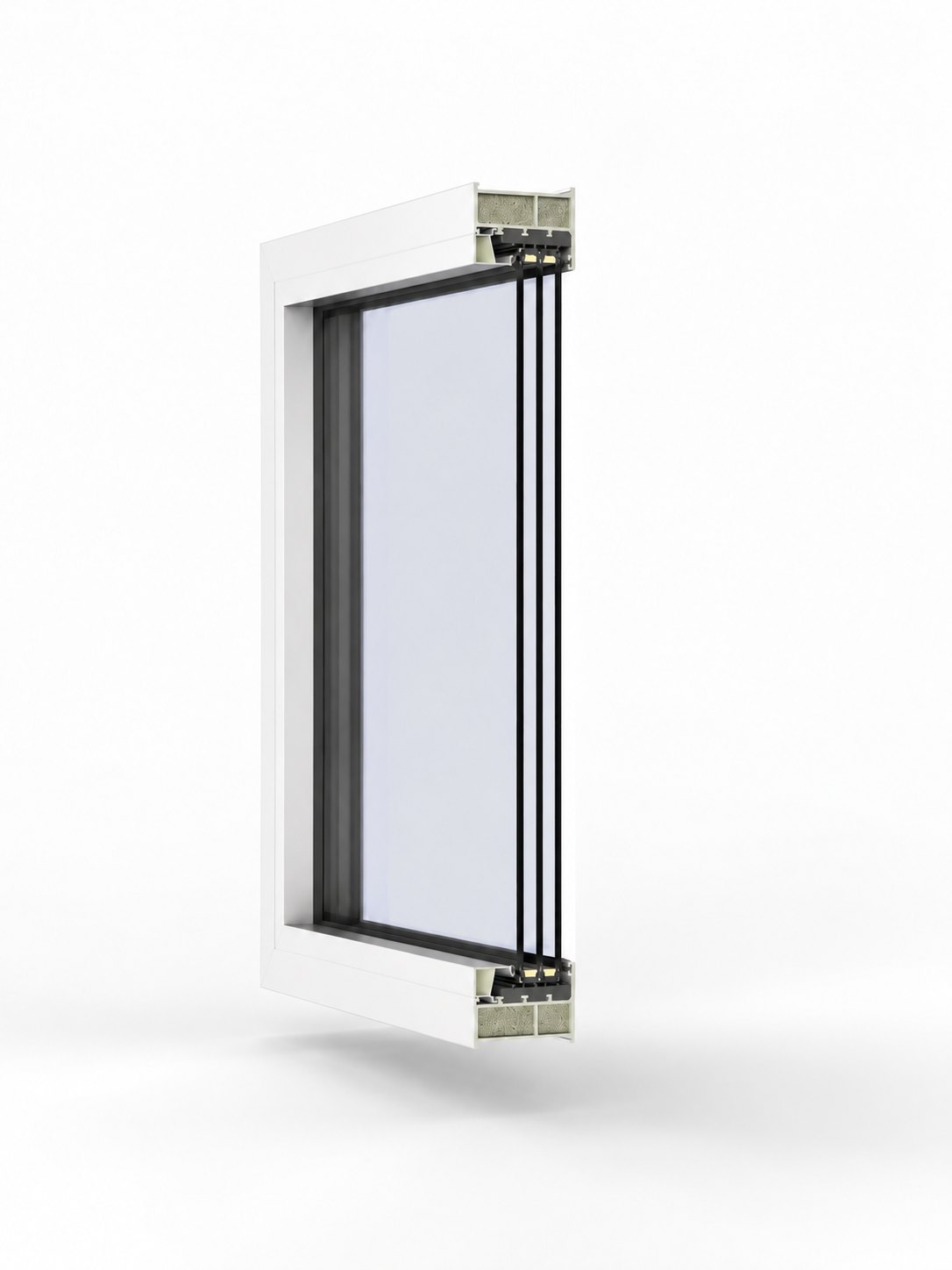
The lowest heat loss in the range. GR65, GR70 and GR85.
F-Series
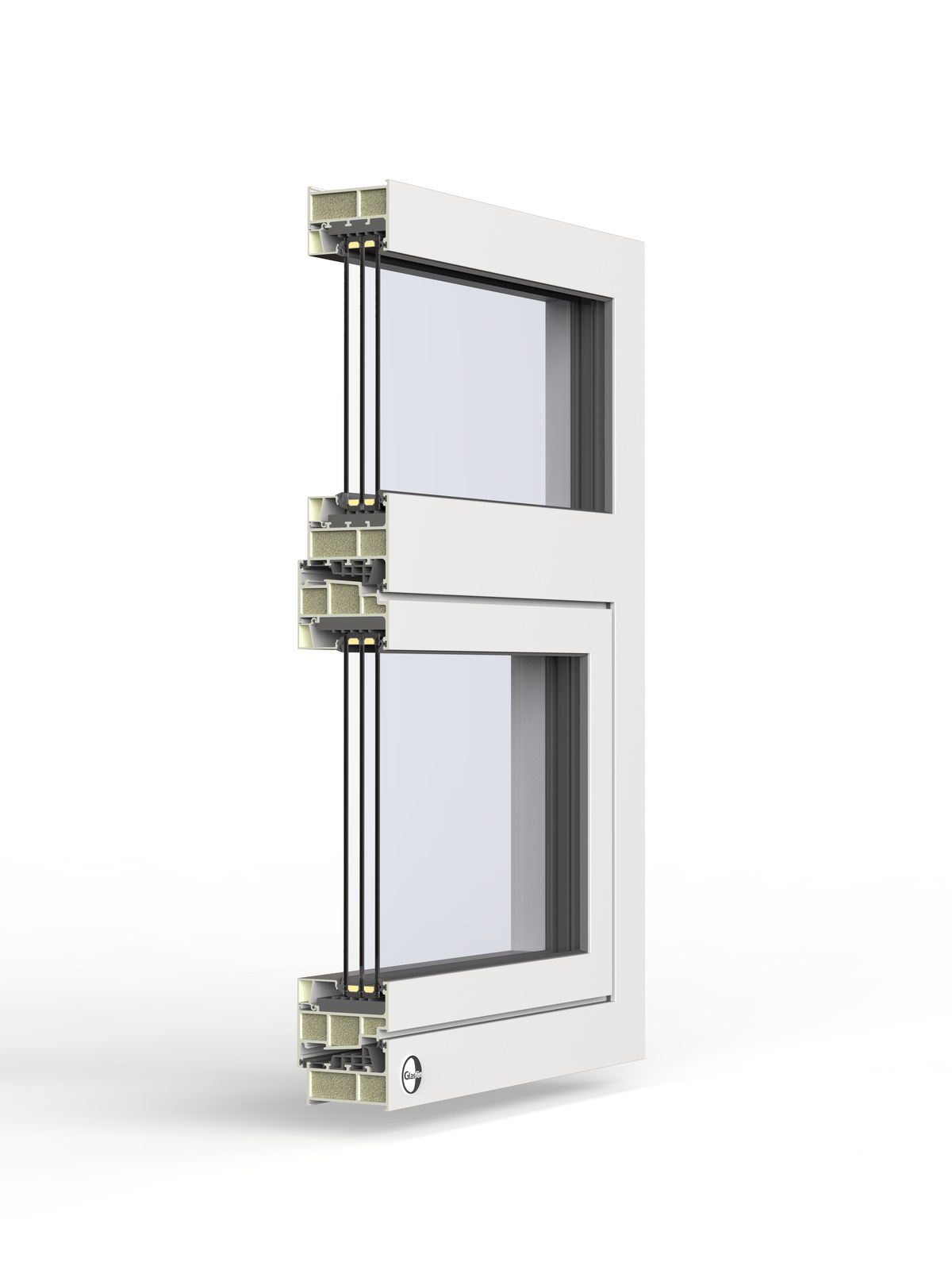
Tilt for ventilation, turn for cleaning and egress, from one handle.
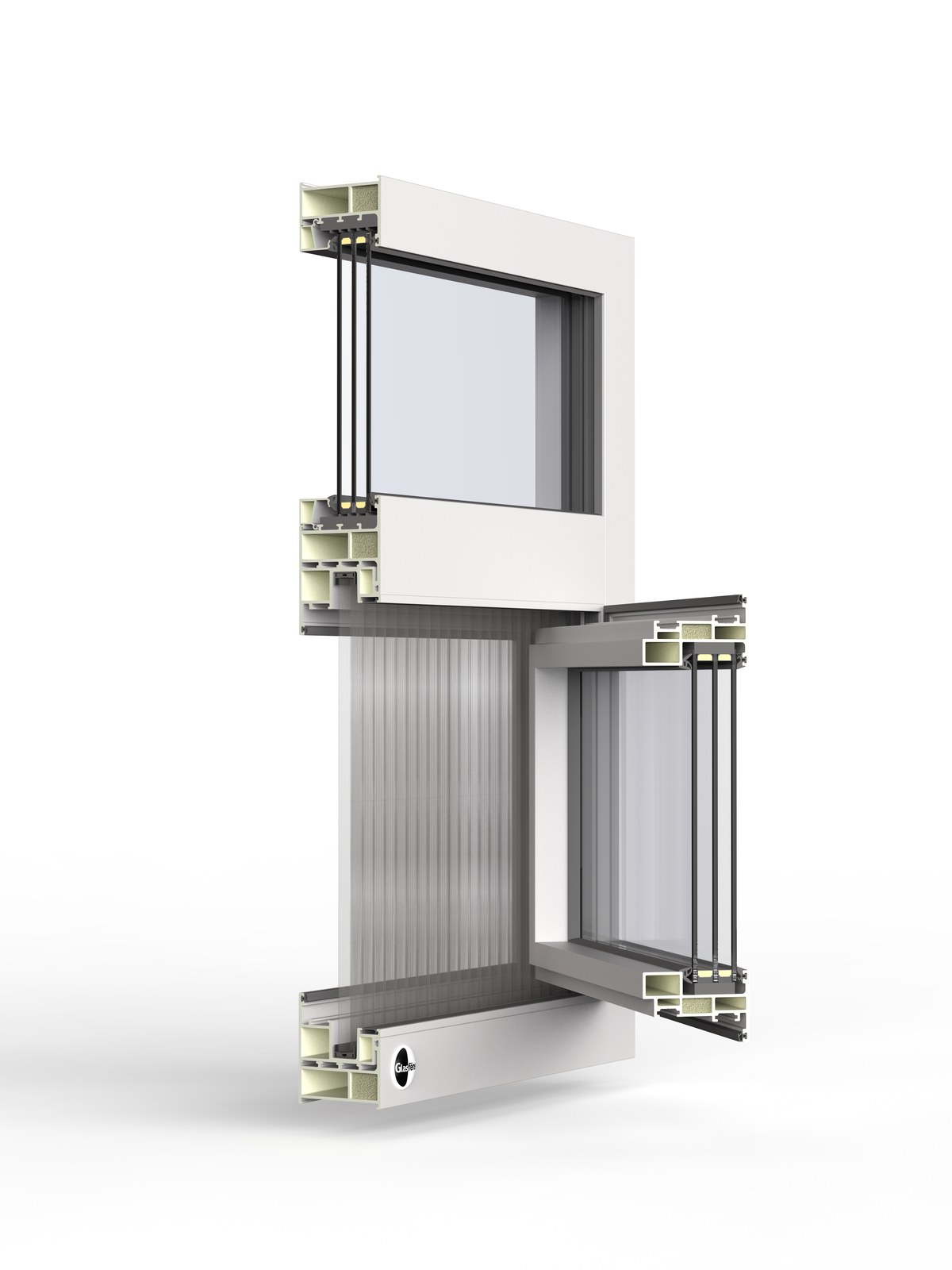
F-Series
Outswing casements, with an integrated insect screen on the GR85.
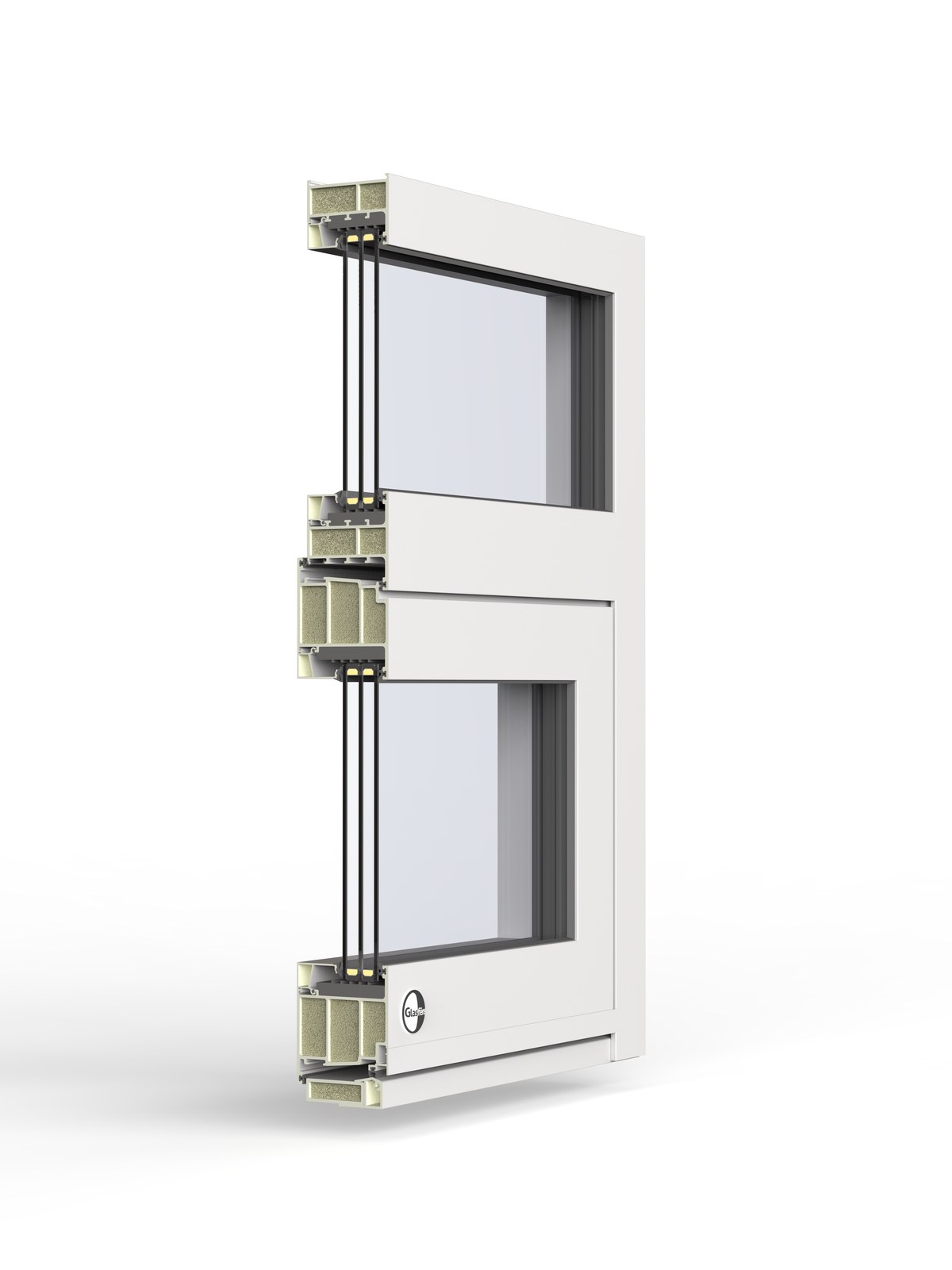
F-Series
Entrance and balcony doors in the GR60, GR70 and GR85 frames.
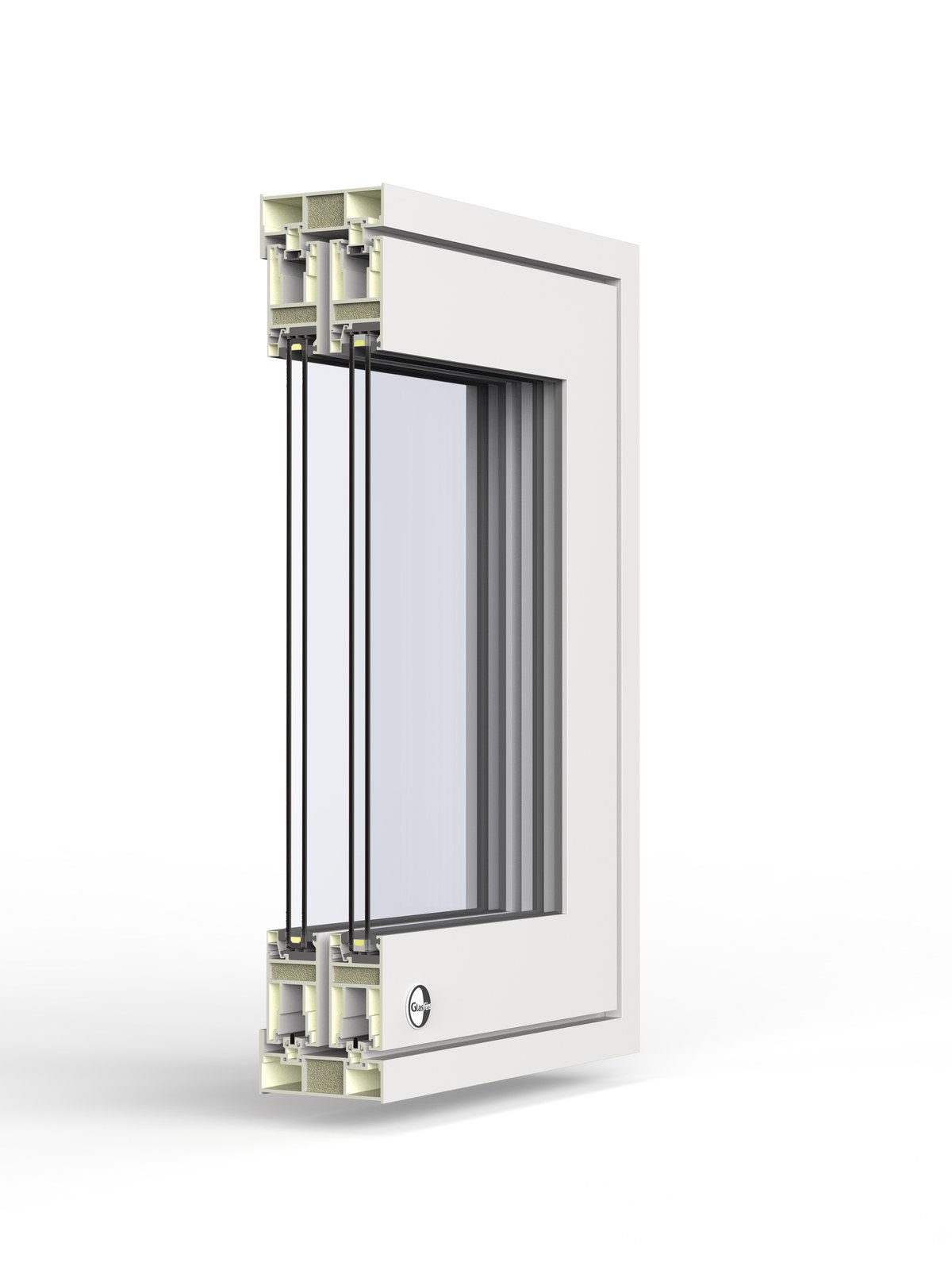
F-Series
Sliding windows and doors up to the GR145 glass wall.
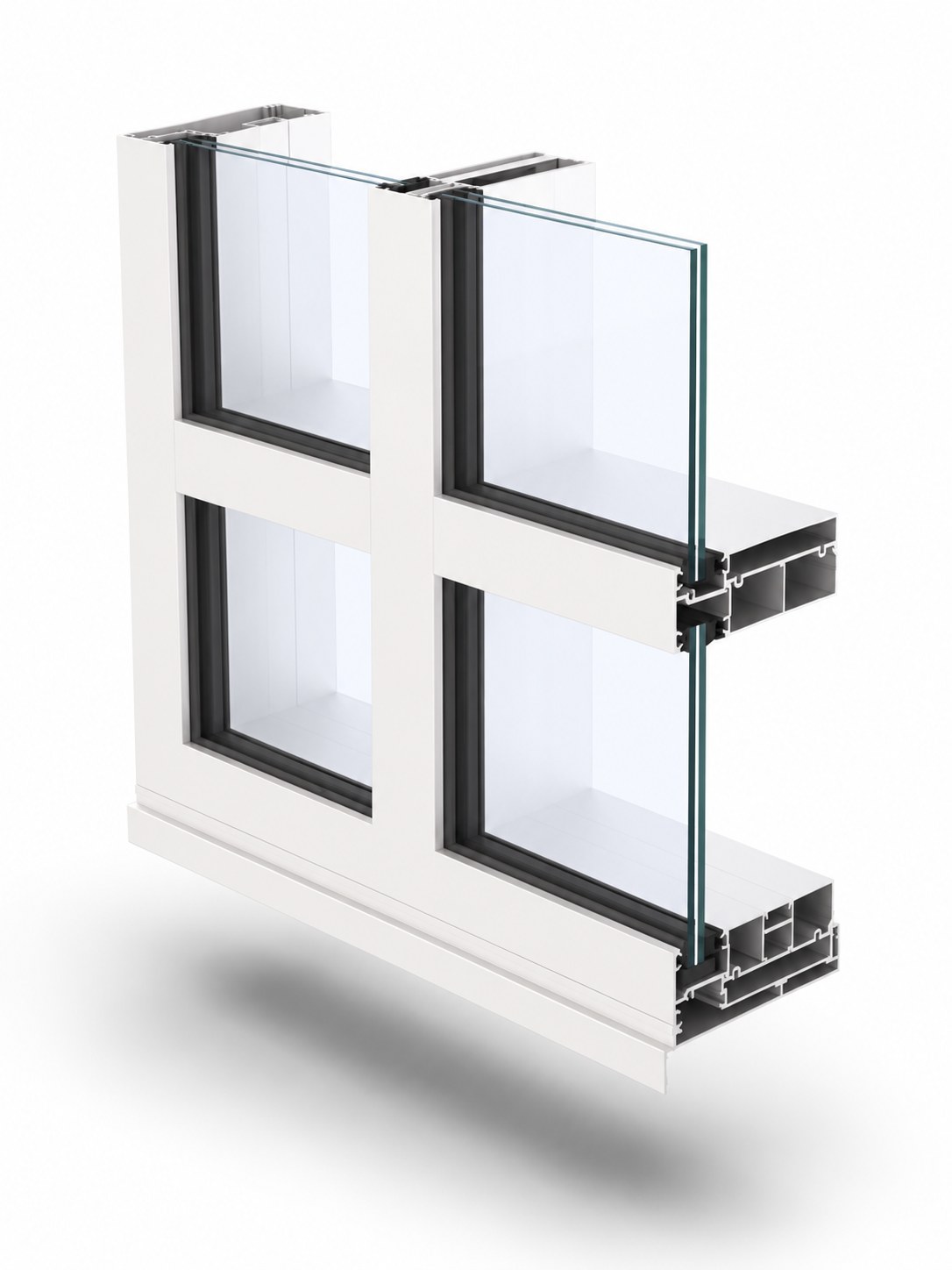
A-Series
Impact-rated aluminum windows, doors and storefront for the coast.
The frame
Our frames are pultruded from glass fiber bound in polyurethane resin from Huntsman Advanced Materials, part of Texas-based Huntsman Corporation. Polyurethane is the premium resin for pultrusion: it costs more than the polyester used in most fiberglass windows and takes more exacting equipment and process control to pultrude, and in return it is tougher, stiffer and more crack-resistant. The result is a frame that is stronger than aluminum, insulates like wood and never rots, rusts or warps.
Every frame grows and shrinks with temperature. Fiberglass moves at almost exactly the rate of the glass it holds, so the seals stay tight from a January night to a July afternoon.
Typical linear thermal expansion, millionths of an inch per inch per °C (×10⁻⁶/K). Published ranges vary by alloy, formulation and fiber content.Measured, not modeled
Thermal conductivity, λ, is how easily heat flows through a material: the lower, the better it insulates. Our pultruded polyurethane fiberglass measured 0.114 W/m·K. That is lower than rigid PVC, the material of vinyl windows, lower even than softwood, and less than a third of the value the international window standard gives for ordinary polyester fiberglass.
The test was done by Intertek, one of the world’s largest independent testing laboratories. Intertek tests and certifies building products in more than 100 countries, including the structural and air-leakage testing of our windows.
And it is the whole story, not half of it. Vinyl frames need galvanized steel inside to stay straight, and steel conducts heat about 440 times faster than our fiberglass. Ours needs no steel at all.
Thermal conductivity λ, W/m·K lower insulates better
GlasFëns value: independent laboratory test by Intertek. All other values: design values from EN ISO 10077-2, Annex A, the international standard for calculating window frame heat loss. Material conductivity is one input to frame performance; whole-frame U-values also depend on profile design, and ours are published on the performance page.


Performance
Every frame section is modeled in LBNL THERM, and every number on our site says whether it was tested, calculated or depends on your project.
GR85 dual action, sill section · ZERO 04 hybrid vacuum glass
THERM 8.1, NFRC 100 · room 70 °F, outside 0 °F
Glass
Every ZERO package is a hybrid IGU: an outer lite and a 12 to 18 mm argon cavity, stacked with a two-lite vacuum insulating glass unit (VIG). A warm-edge spacer sets the depth of the argon gap, so the unit fits every F-Series glazing pocket, and the vacuum unit carries a 25-year warranty.
Vacuum glass, compared
Our vacuum unit is a later-generation design. Here is how it differs from vacuum glass made the conventional way.
| GlasFëns vacuum unit | Conventional vacuum glass | |
|---|---|---|
| Support pillars | Titanium, on a wide 55 mm (2⅓″) grid | Steel or ceramic, often every 20 to 28 mm on thinner glass |
| Edge seal | Flexible titanium-alloy metal seal that tolerates large temperature differences | Rigid fused glass-frit (solder glass) seal that can crack under extreme temperature differences |
| How the vacuum is made | Pumpless: sealed in a single step under vacuum, with no pump-out hole | Pumped out through a hole in the glass, which is then sealed with a visible cap or plug |
| Getter | Concealed at the edge, out of sight once glazed | In some units, visible in the glass area |
| Edge in the frame | Narrow seal, hidden under the glazing bead | Wider seals and caps can show at the edge of the glass |
| Low-E inside the vacuum | On both vacuum faces: the seal is made below 280 °C, cool enough to protect the coatings | Frit seals need more than 400 °C, which limits the coatings that can go inside |
| Glass | Two fully tempered lites; the low seal temperature keeps full temper | Often two 3 mm lites; high-temperature sealing can relax the temper |
Pillar spacing for conventional units per published maker data (20 to 28 mm grids). Our vacuum unit data per the glass maker.
Included as standard
The upgrades other manufacturers charge extra for, or leave out, come in every GlasFëns window. Tap any card for the details.
Full coverage terms are in our limited warranty ›
What it’s made of
Two things you can’t see in a showroom photo decide how a window ages: what binds the glass fiber in the frame, and what moves and locks the sash.
Our profiles are pultruded with polyurethane resin from Huntsman Advanced Materials, part of Huntsman Corporation of The Woodlands, Texas. Most fiberglass windows use polyester resin because it is cheaper and runs faster on the pultrusion line. Polyurethane costs more and pulls more slowly. It is worth it:
| Polyurethane | Polyester | |
|---|---|---|
| Toughness | Far tougher, resists cracking and impact | More brittle, prone to micro-cracking |
| Stiffness | About 40% stiffer, allowing walls about 25% thinner | Baseline |
| Screw retention | Higher, so hinges and locks stay tight | Lower |
| Styrene | None | Styrene-based, emitted during processing |
| Cost & processing | Costlier resin; needs metered two-part injection and tight process control | Cheaper; simple open resin bath |
Sources: Huntsman RIMLINE® pultrusion data; Liberty Pultrusions.
Our sashes run on hardware from Roto, Siegenia and G-U, family-founded German companies that have made window hardware for generations and supply many of Europe’s leading window makers.
Economy hardware is often light-gauge or die-cast zinc, sized for lighter sashes, with one or two latch points and little or no adjustment. Over the years the sash sags and the seal loosens.
Health & planet
A window stays in place for decades. What it gives off indoors, how long it lasts and how much energy it saves all add up over that time.
Once cured, polyurethane fiberglass is an inert thermoset. It emits no VOCs in service, and it contains no plasticizers, no chlorine and no styrene.
PVC, sold as vinyl or uPVC, is about 57% chlorine by weight, and burning PVC releases hydrogen chloride gas. Our frames contain no chlorine at all.
The lowest-carbon window is the one you never replace. Fiberglass does not rot, rust, warp or go brittle in the sun, and because it moves with the glass, the seals last too. Fiberglass windows are expected to last up to 50 years or more; vinyl windows typically last 20 to 30, and the AIA puts the optimum service life of PVC windows at about 25.
At the factory gate, published data put a double-glazed fiberglass window at about 121 kg CO₂e per m², in the same range as vinyl windows (105 to 160) and well below aluminum at its high end (up to 230). The difference is how long it lasts. Over 50 years, fiberglass comes to about 2.4 kg CO₂e per m² per year; vinyl, replaced after about 25, comes to 4.2 to 6.4. In aluminum windows, the frame alone is 60 to 80% of the embodied impact.
Cradle-to-gate (A1–A3) values from manufacturer EPDs compiled by the University of British Columbia (2022); aluminum frame share per Carlos et al., Embodied impacts of window systems.
Our metallic Roto handle finishes are anodized: a hard oxide layer grown from the aluminum itself, not a coating laid on top, so it will not rub off, peel or tarnish the way plated or painted handles do. Solid colors such as white and black are durable powder coat.
Fiberglass frames are factory-painted with a two-part, water-based aliphatic polyurethane, oven-cured and matched to any color. Because it is a liquid paint, a scratch or scuff can be touched up on site with color-matched paint. Powder coat, used on aluminum, is baked on at about 200 °C (390 °F) in a factory oven, so it cannot be redone on site, and touch-ups have to use a different paint. Our frame finish is covered by our 10-year finish warranty.
| GlasFëns fiberglass | Vinyl / uPVC | Aluminum | Wood | Steel | |
|---|---|---|---|---|---|
| Off-gassing in service | None | Low | None | From paints, stains and preservatives | None |
| Chlorine content | None | About 57% by weight | None | None | None |
| Weathering | No rot, rust or UV embrittlement | Can yellow and embrittle with UV and heat | Corrodes in salt air unless protected | Rots without regular upkeep. Aluminum cladding can trap water against fast-grown wood and rot it out within a few years | Rusts where the coating breaks |
| Upkeep | Wash only | Wash only | Coating upkeep at the coast | Refinish every few years | Coating upkeep |
| Frame insulation | Excellent: our fiberglass measured λ 0.114 W/m·K | Good: rigid PVC λ 0.17, but the galvanized steel inside conducts heat | Poor without a thermal break (λ 160) | Good: softwood λ 0.13 | Poor (λ 50) |
λ is thermal conductivity in W/m·K; lower insulates better. PVC, aluminum, steel and softwood values are the design values of ISO 10077-2, Annex A; our fiberglass value was measured by Intertek. PVC chlorine content follows from its chemistry (vinyl chloride, 56.7% chlorine). PVC window service life per the AIA Environmental Resource Guide.
A-Series · Hurricane aluminum
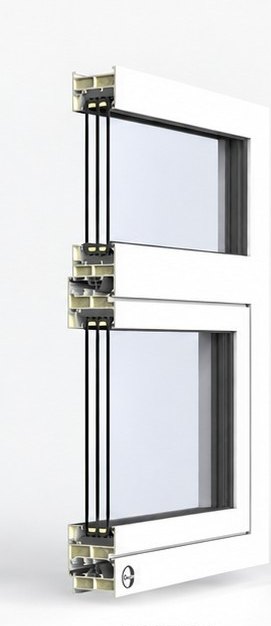
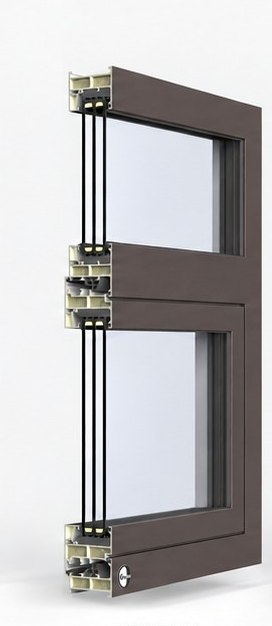
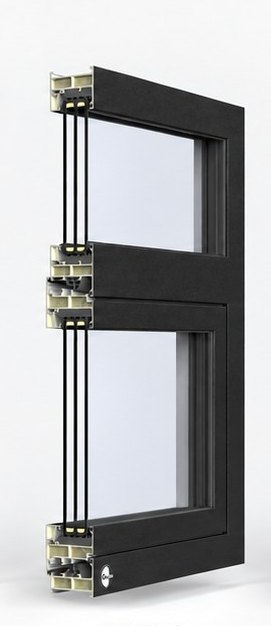
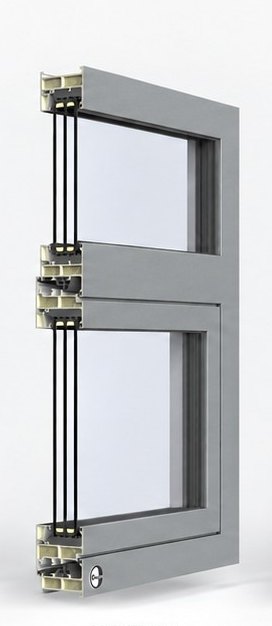
Aluminum, impact-rated for hurricane and high-wind zones, in the same clean architectural language as the fiberglass line. Our impact windows, doors and window walls carry Florida Product Approval for use inside and outside the High Velocity Hurricane Zone, at design pressures up to ±115 psf. Our casement and awning windows also carry Miami-Dade County Notices of Acceptance, rated for both large and small missile impact. Every system is tested for air infiltration, water resistance, uniform static load, missile impact, cyclic wind pressure and forced entry, to Florida Building Code TAS 201, 202 and 203.

Colors & finishes
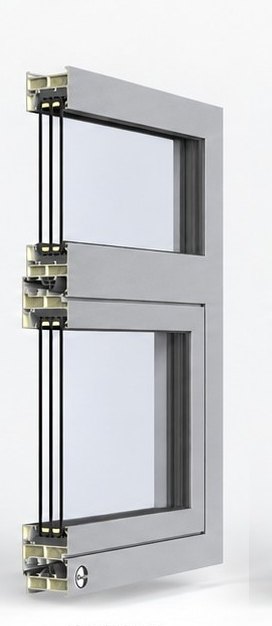
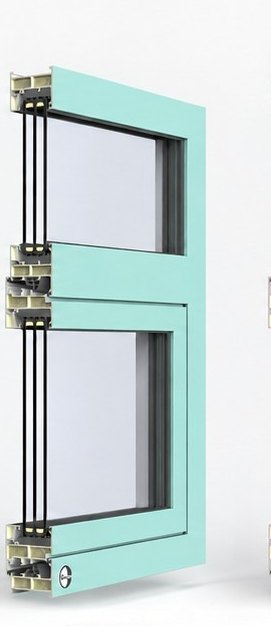
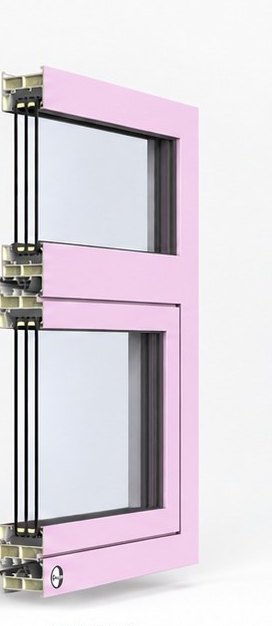
Need a color that is not on the chart? Send us its RAL number and we will match it.

For specifiers
U-value and SHGC, condensation, air barrier interface, installation, warranty and more.
THERM sectionsEvery GR70 and GR85 section, modeled at NFRC conditions. Download the full set as a PDF.
Project supportSend the window schedule and we model whole-window values at your sizes, with pricing.
We return whole-window performance at your sizes and a priced package, typically well below the leading American window brands and high-end European imports. Passive House-level performance, without the premium price.